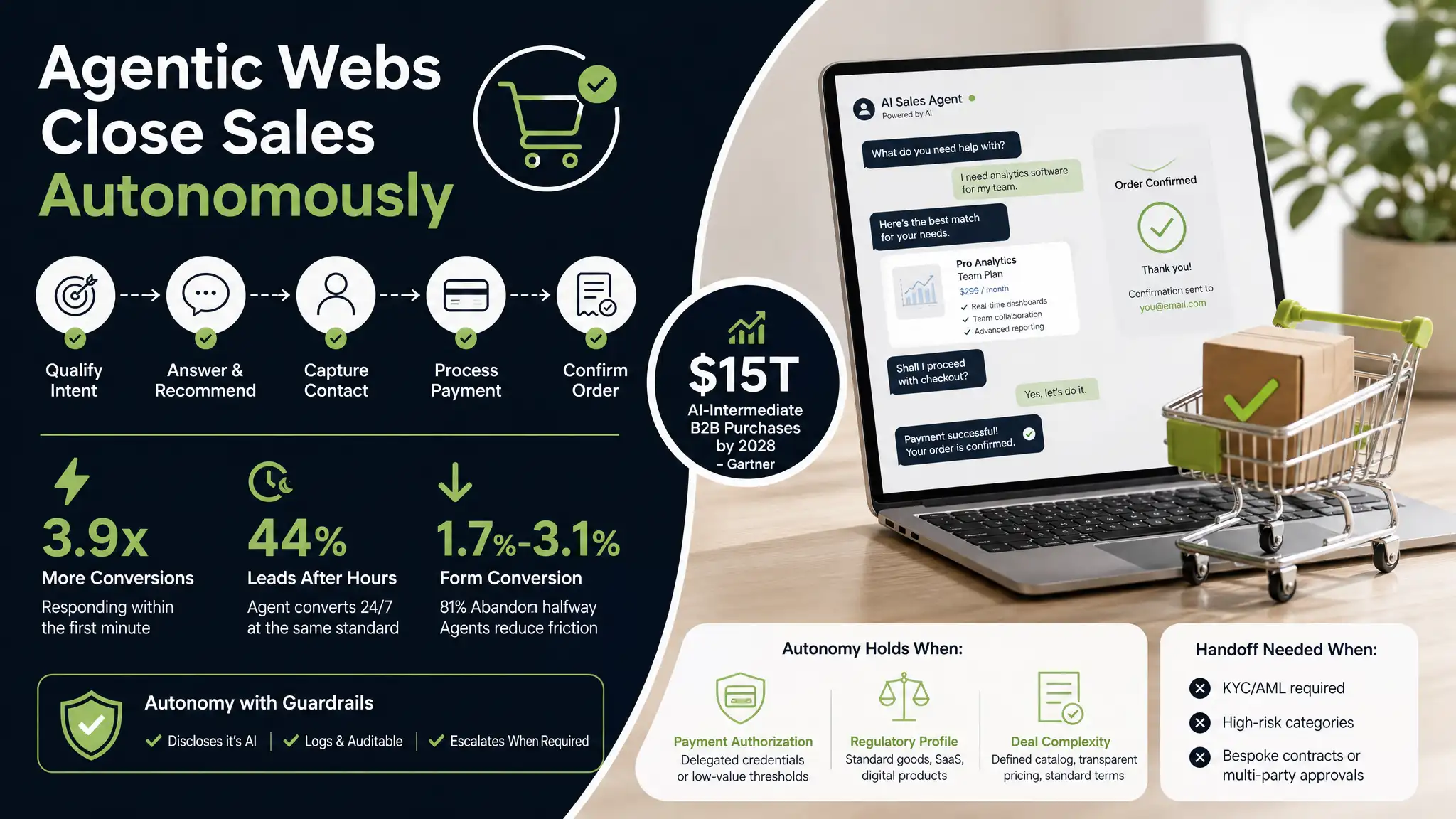
Can an Agentic Web Qualify Your Leads Automatically?
An agentic web system qualifies leads instantly, answering questions, scoring intent, and capturing contacts in a single conversation, with no forms and no wait time.
Read →Theory and analysis of the agentic web: the macro shift, the hypothetical single-site product, model comparisons, integration, and SEO in the age of AI answer engines.

An agentic web system qualifies leads instantly, answering questions, scoring intent, and capturing contacts in a single conversation, with no forms and no wait time.
Read →
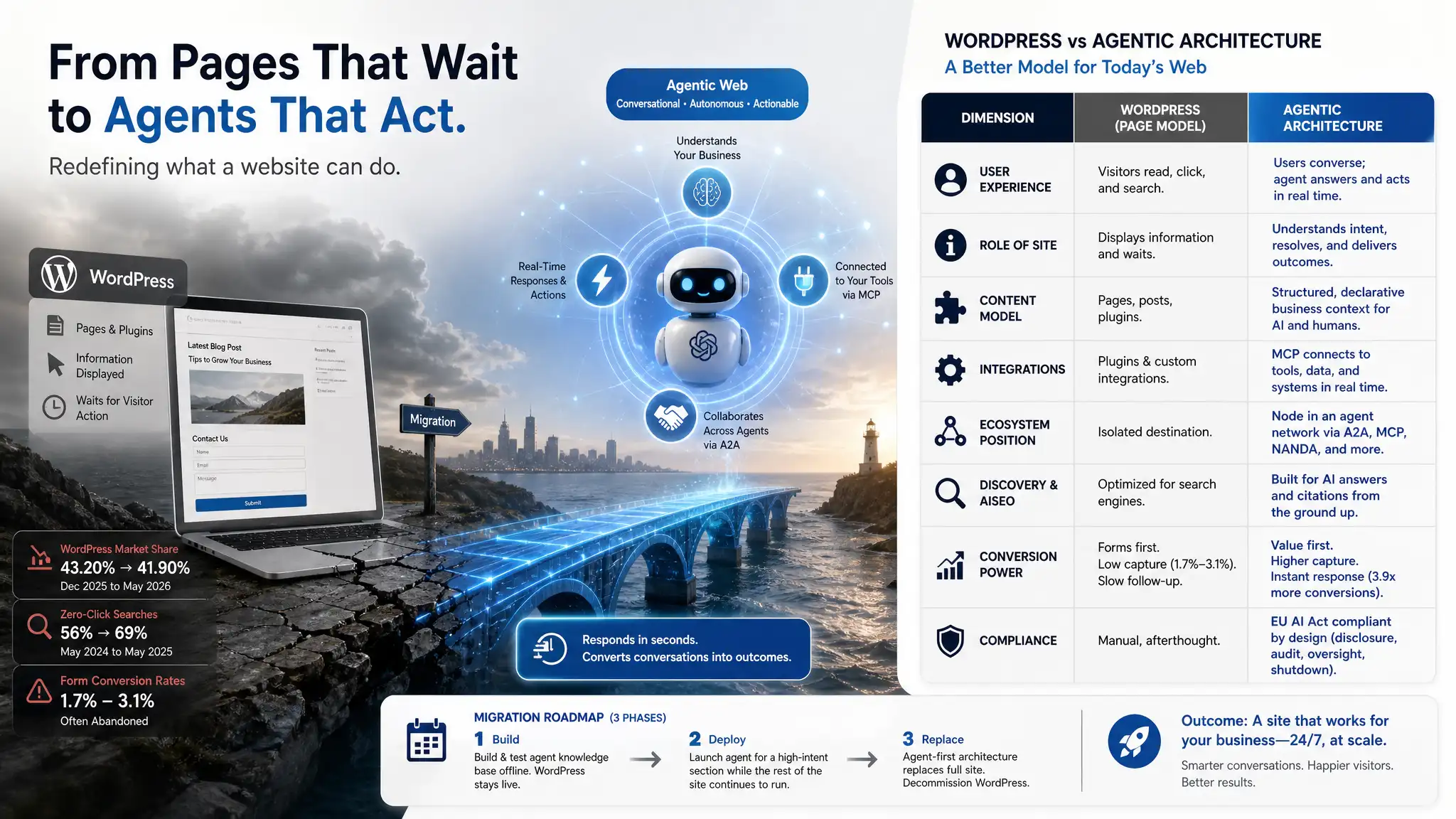
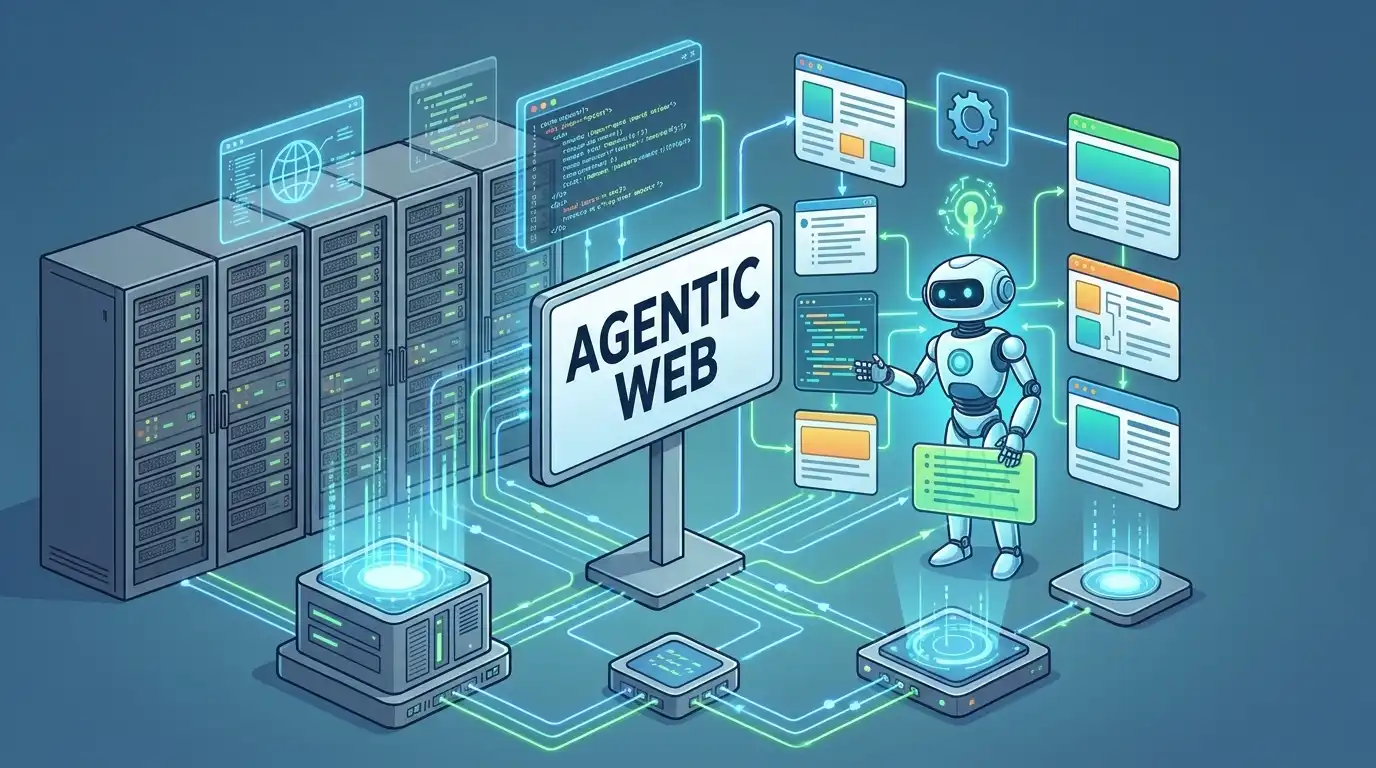
WordPress displays pages. An agentic web architecture converses, qualifies leads, and adapts in real time. Here is what the replacement involves and why it converts better.
Read →
Article 14 of the EU AI Act requires high-risk AI systems to support monitoring, output interpretation, override, and shutdown by natural persons. Transparency rules apply from August 2026.
Read →
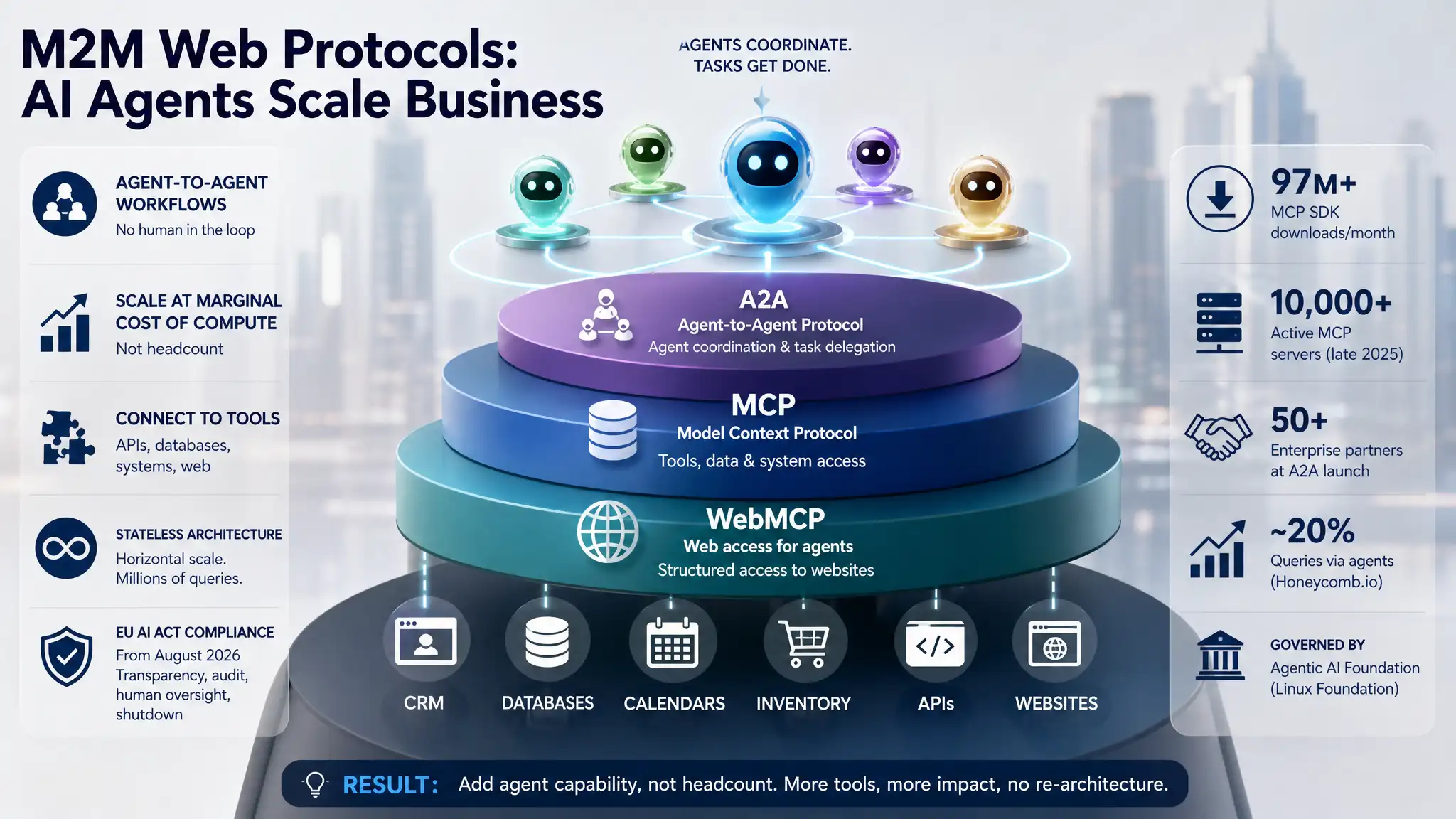
MCP and A2A let AI agents handle tasks and delegate work across systems automatically. Machine-to-machine protocol stack changes the economics of growth.
Read →
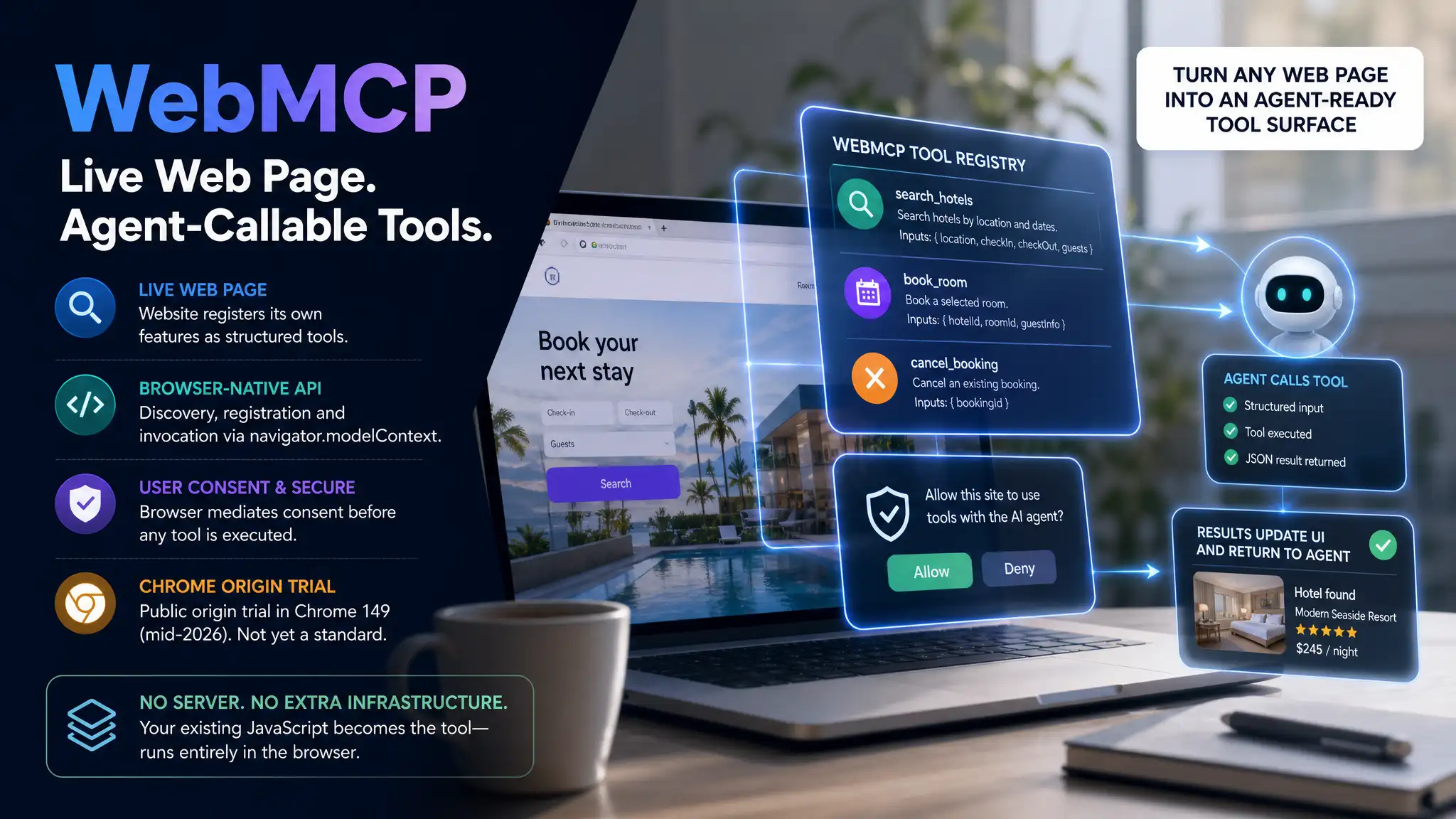
WebMCP is a W3C browser API that exposes a page's features as AI-callable tools, no separate server needed. In Chrome 149 origin trial as of mid-2026.
Read →
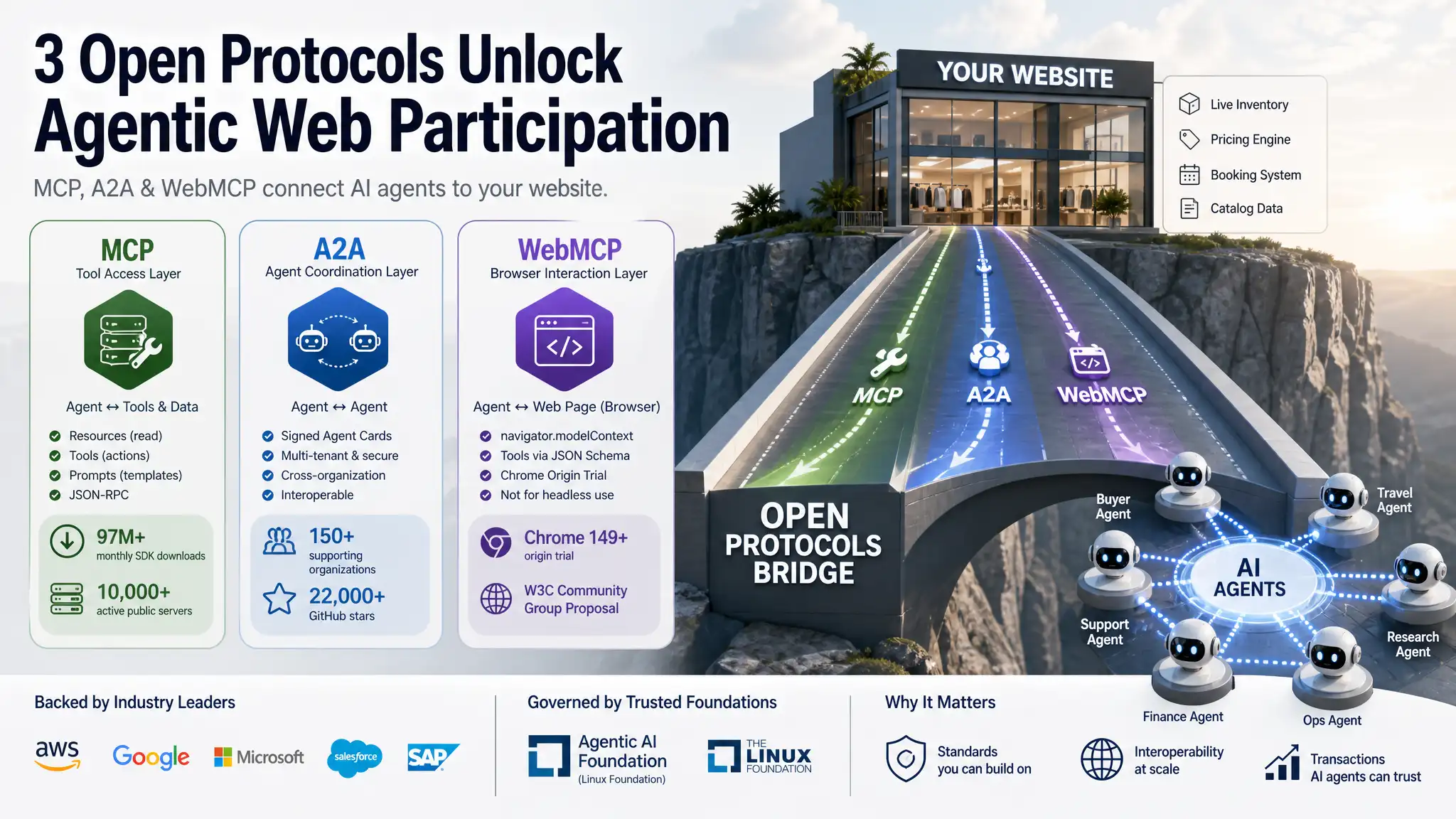
MCP, A2A, and WebMCP determine whether AI agents can transact with your site or only look at it. Here is what each layer does and where each stands today.
Read →
How a website built as an agent differs from one that displays: eight capabilities across conversation, infrastructure, and measurement
Read →
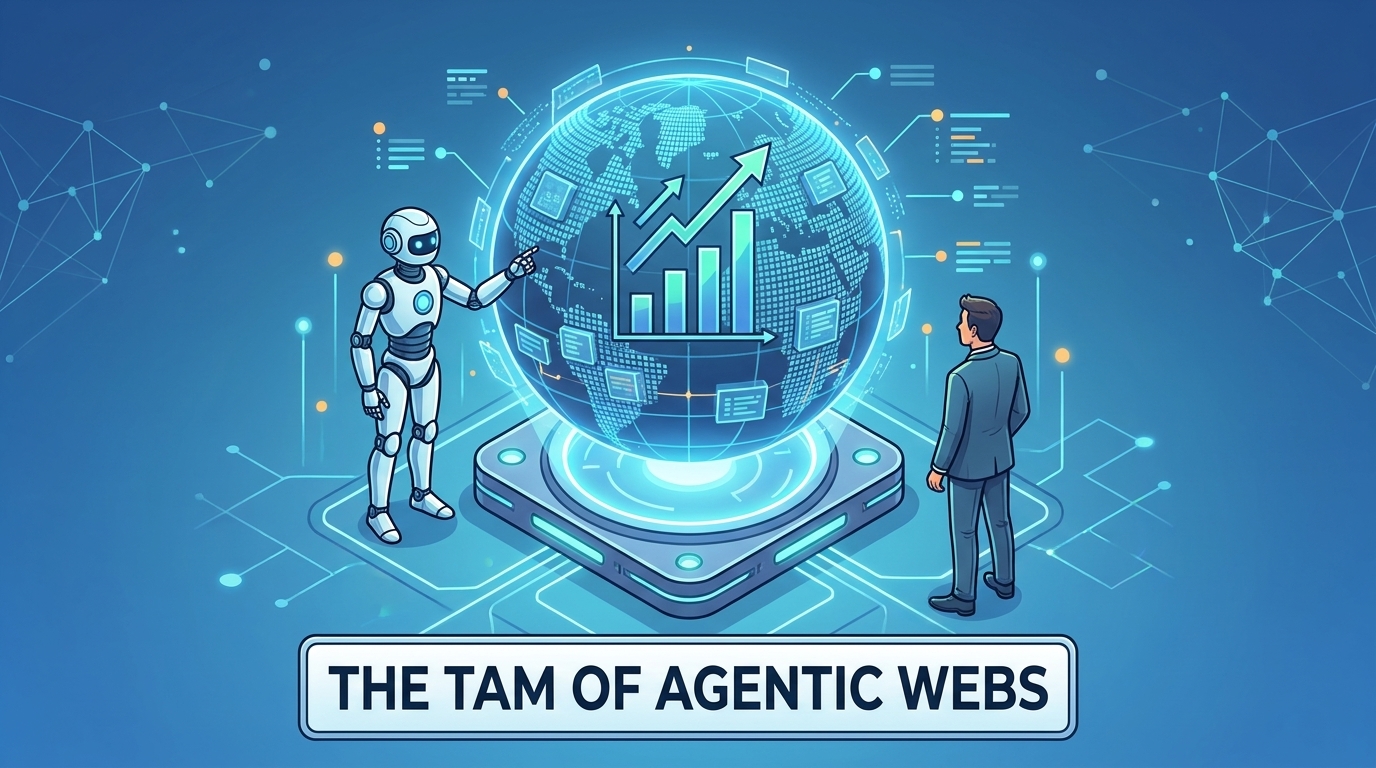
What market size emerges if "agentic web" becomes the generic name for a full product category. A base case of $40B–$80B, upside above $100B.
Read →
Why your website needs to be a protocol, not just a UI. A technical look at the A2A economy, MCP, and the agent-readable web.
Read →
For thirty years we have designed websites for one kind of visitor: a person with eyes, limited patience, and a mouse. With AI that assumption is breaking.
Read →
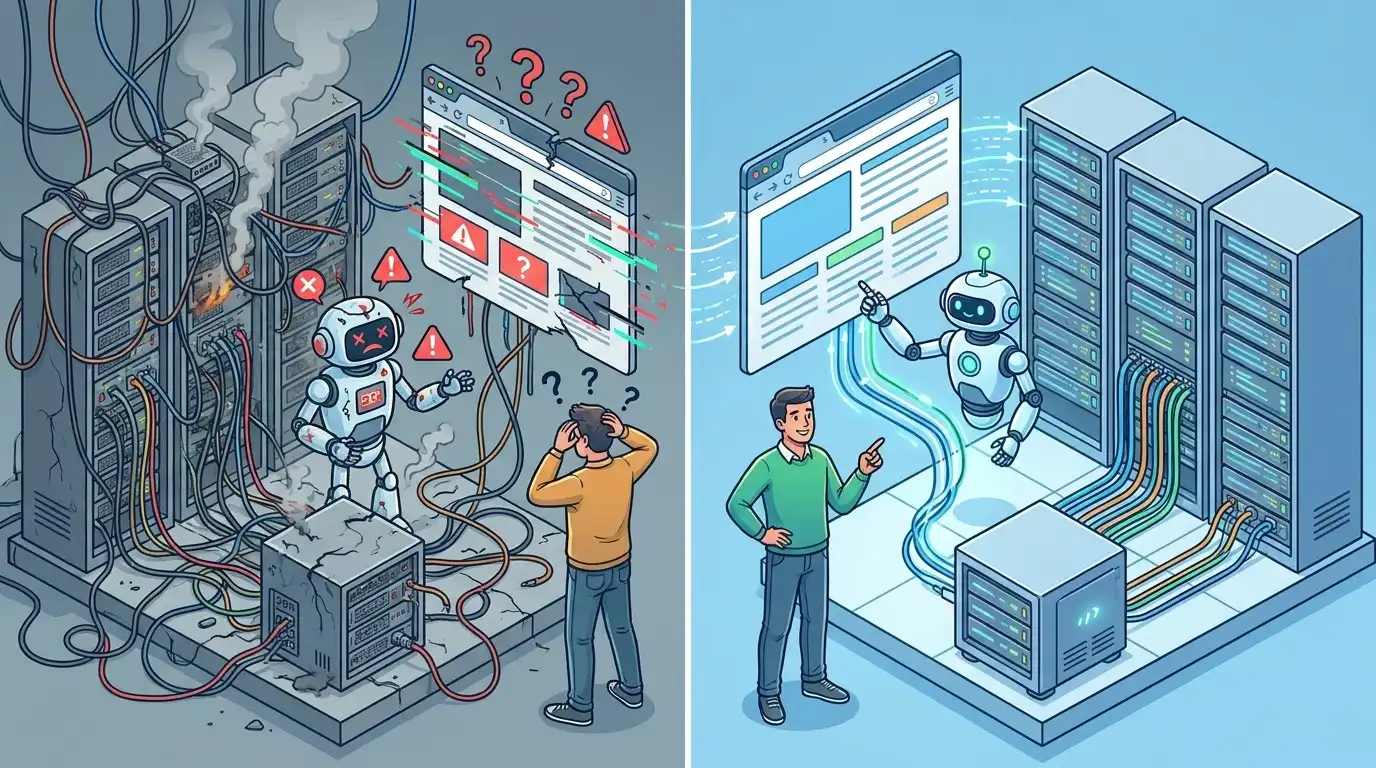
Direct comparison across five axes: interaction model, conversion rates, maintenance cost, personalization, and scalability. No absolute winner.
Read →
An agentic web replaces static pages with an AI agent that converses, qualifies, and converts visitors in real time: how it differs and why it matters.
Read →
Most businesses get AI wrong on the first try. Here are the five most common mistakes and the fixes that turn a widget into a working system.
Read →