Replacing WordPress with an agentic web architecture means discarding the page-and-plugin model and rebuilding your site as a conversational, autonomous system that knows your business, responds to declared intent in real time, and hands off to a human only when the transaction genuinely requires it. The architecture is different at every layer: content, infrastructure, discovery, and compliance.
Why WordPress Is No Longer the Default Bet
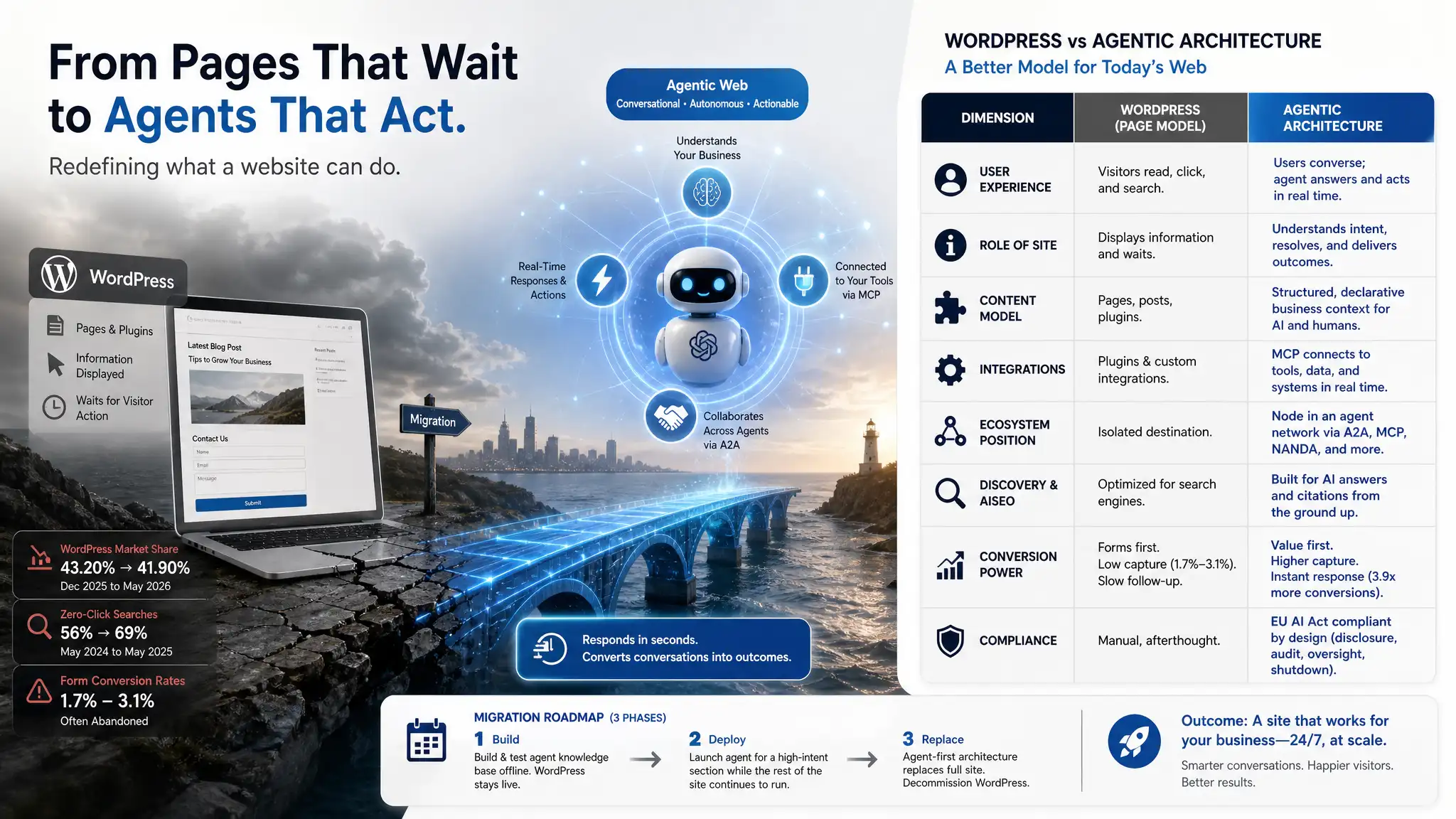
WordPress powered the web for two decades because publishing was the hard part. Today, publishing is trivial and converting is everything. Search Engine Journal reports that WordPress market share fell from 43.20% in December 2025 to 41.90% by late May 2026, a 1.3-point drop in six months, double the loss recorded in all of 2025. The decline is accelerating precisely as AI search reshapes what visitors expect from a website.
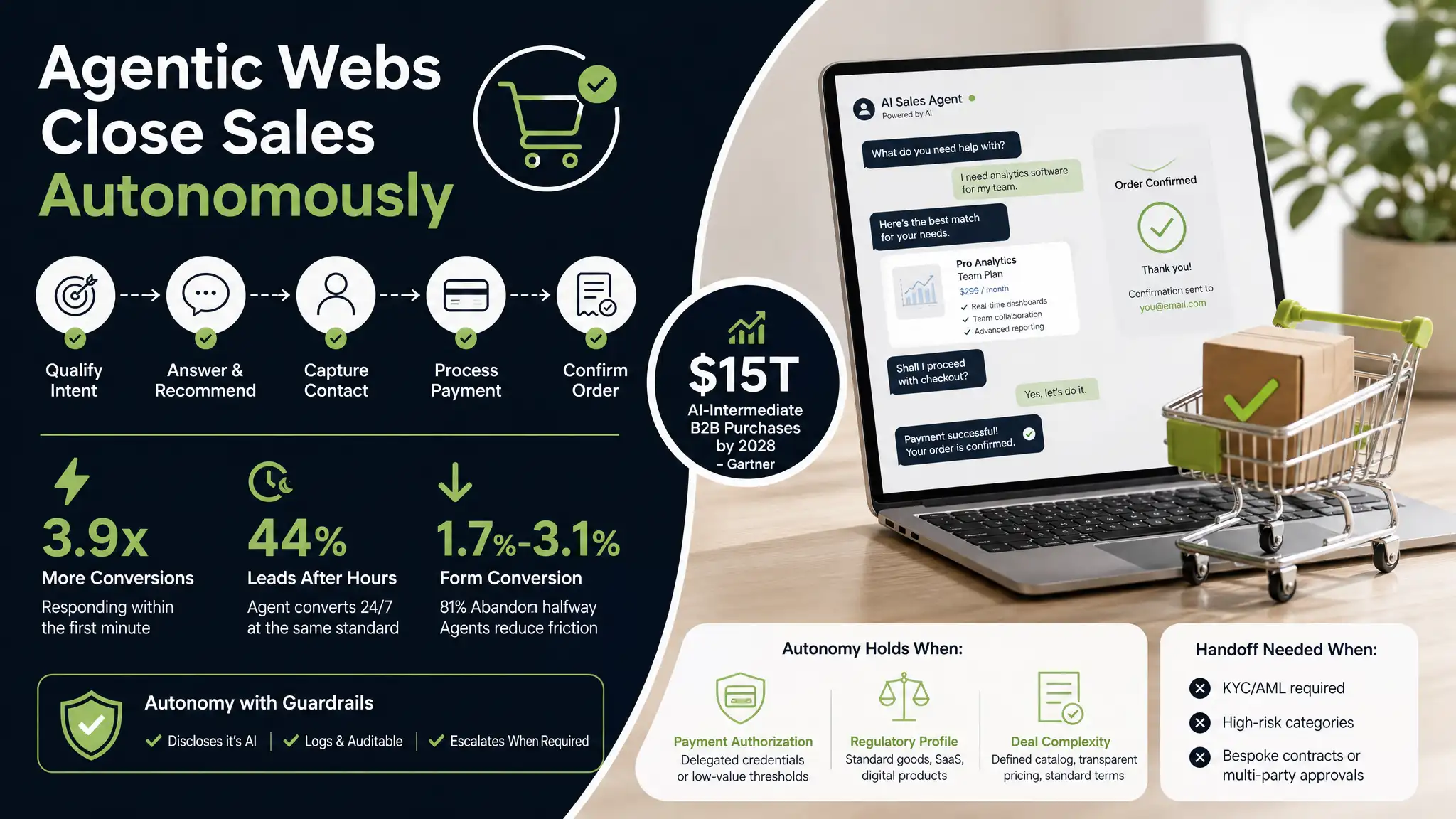
The structural problem is not WordPress itself but the model it represents: a site that displays information and waits. Visitors arrive, scan for three seconds, and leave. Forms convert at between 1.7% and 3.1% and the majority are abandoned before submission. A visual redesign or a new plugin does not close that gap, because the gap is behavioral, not cosmetic.
The search channel that once fed those pages is also contracting. Similarweb data compiled by Omnibound AI shows zero-click searches rising from 56% to 69% between May 2024 and May 2025, a 13-point acceleration that maps to the rollout of AI Overviews. Informational traffic that once landed on a WordPress blog is increasingly resolved inside the answer engine itself, never generating a click.
What an Agentic Web Architecture Actually Looks like
An agentic web is not a chatbot bolted onto an existing WordPress page. The entire site is redesigned as an agent: the business's knowledge, catalogue, pricing logic, and qualification criteria are loaded into the system, and the interface is a conversation rather than a navigation menu.
The architecture has three functional layers:
Content and context layer. Instead of blog posts and pages, the content layer holds structured, declarative, self-contained data: product answers, qualification trees, pricing conditions, objection responses. Every piece is written to be consumed by an AI agent and cited by external answer engines (AISEO), not formatted for a human to scroll through.
Agent and tool layer. The agent connects to business tools via open protocols. The Model Context Protocol (MCP), now a Linux Foundation project, defines how an AI agent discovers and calls external tools through a uniform interface. An agent sitting on a site can pull real-time stock, check availability, read a CRM record, or update a booking system within the same conversation, without redirecting the user to a separate app or form.
Interoperability layer. An agentic web is a node within a larger mesh. The Agent-to-Agent (A2A) protocol, alongside MCP and emerging standards such as NANDA, allows one agent to delegate tasks to another or receive qualified leads from a third-party agent. The site stops being an isolated destination and becomes a participant in a cross-platform agent ecosystem.
How the Replacement Process Works in Practice
The migration is not a like-for-like platform swap. Replacing WordPress with an agentic architecture requires four decisions before any code is written.
Scope the agent's mandate first. Decide what the agent will resolve without human intervention: product questions, lead qualification, appointment setting, or price calculation. Anything outside that mandate routes to a human. Defining the boundary prevents the agent from making commitments it cannot keep and gives developers a testable specification.
Restructure content as business context, not marketing copy. WordPress pages are written for human readers who navigate, skim, and decide at their own pace. Agent context is structured as facts, conditions, and rules that the AI can retrieve and apply within a single turn of conversation. Migrating content means rewriting it from the ground up, not importing it.
Build for AISEO from the architecture up. When a potential buyer asks ChatGPT or Perplexity about your product category, the cited source is the business that structured its content as declarative, schema-marked, topically authoritative data. A WordPress site can add schema plugins, but an agentic web is built on that requirement from day one: the content model, the API surface, and the publishing pipeline are all designed so that every answer the agent gives is also indexable and citable by external AI systems.
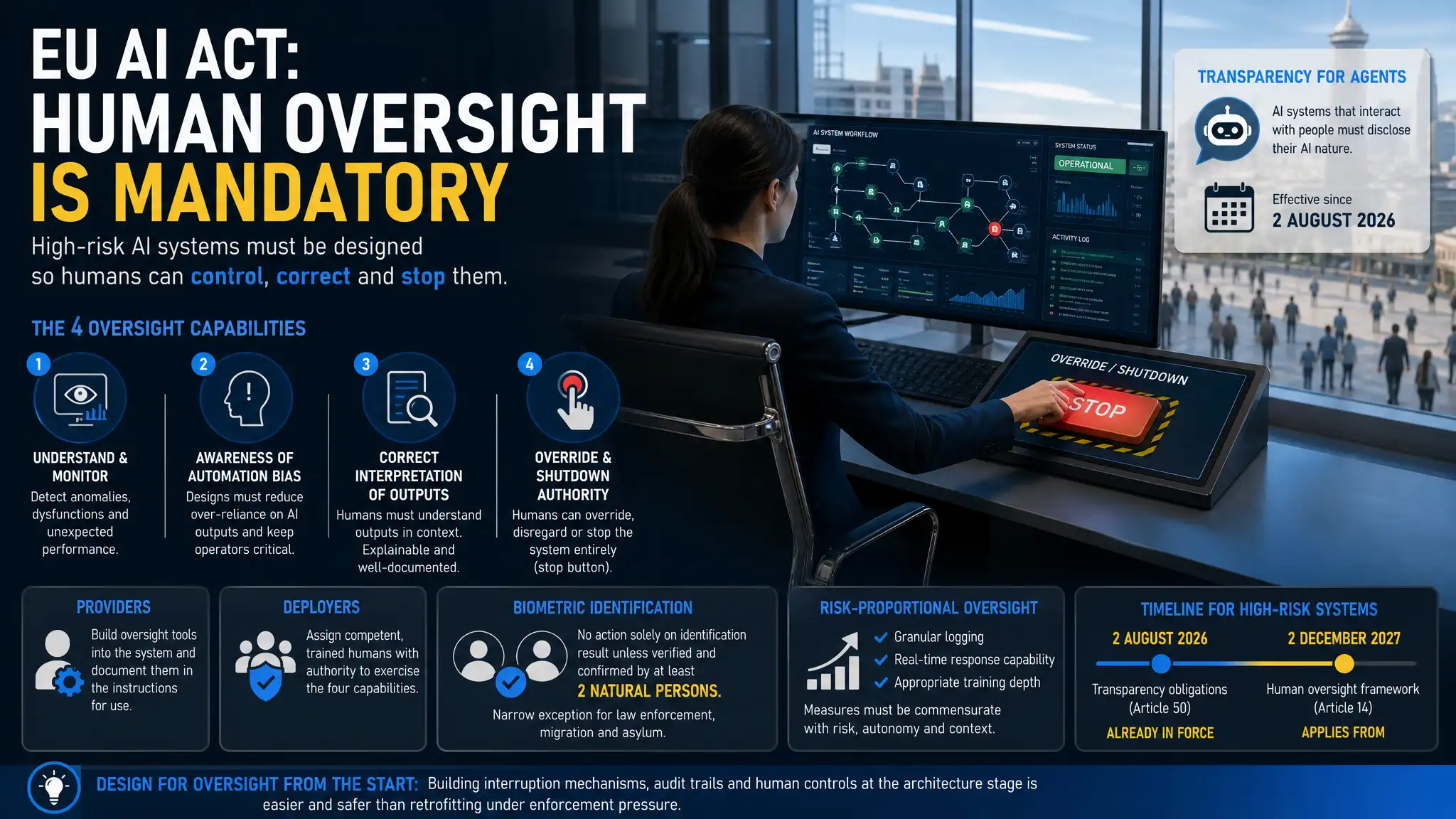
Plan for EU AI Act compliance before launch. From 2 August 2026, Article 50 of the EU AI Act (Regulation 2024/1689) requires any autonomous system interacting with users in the EU to disclose that the user is talking to AI, and to maintain auditable technical documentation with human oversight and shutdown mechanisms. These are architecture decisions, not post-launch additions: disclosure logic, audit logging, and override controls need to be built into the system, not retrofitted.
What the Agentic Architecture Converts that WordPress Cannot
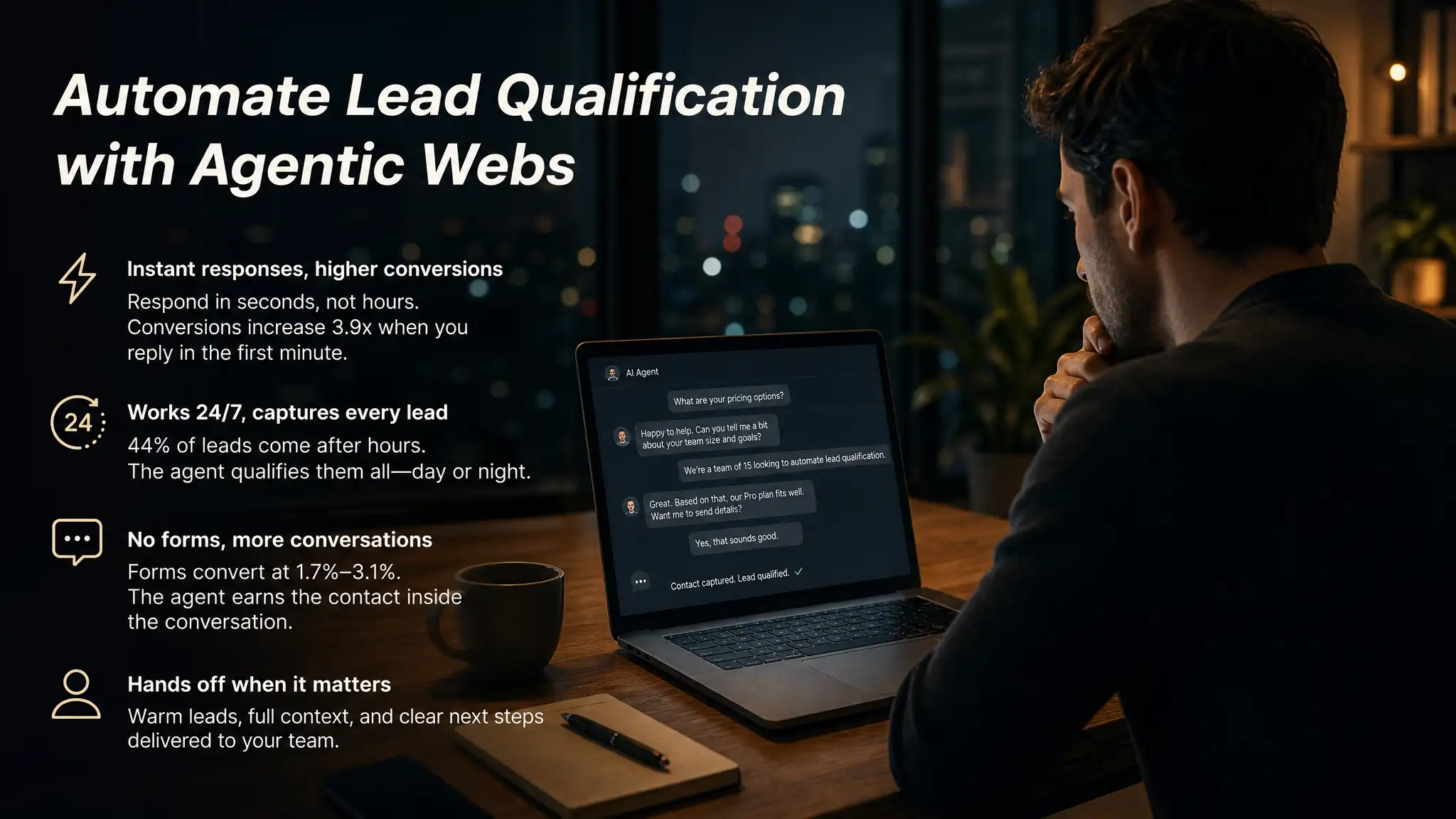
The conversion advantage is not about a better design or a faster page. It is about what happens in the 47-hour gap between a lead submitting a form and a sales team member responding to it. An autonomous agent responds the second intent appears. Responding within the first minute of a visitor's session multiplies conversions by a factor of 3.9 compared with delayed follow-up. That response quality is constant at 3 AM and on weekends, not just during business hours.
More consequentially, the agent asks for contact information at the end of a useful conversation, once the visitor has already received value, rather than as a gating toll before any information is provided. That sequence is the structural reason capture rates from agent conversations outperform form capture: the visitor has a reason to identify themselves because they already got something in return.
💡 Architecture tip: When scoping your agent's knowledge base, include your three most common sales objections as explicit resolution scripts, not just product facts. The agent handles objections only if it was given the reasoning to do so; leaving them out is the single most common gap that sends qualified visitors back to zero.
The Timeline and Sequencing a Migration Requires
A realistic migration from WordPress to a fully operational agentic web runs in three phases. In the first phase, the existing WordPress site stays live while the agent's knowledge base is built and tested offline. In the second phase, the agent is deployed as the primary interface for a specific high-intent section (pricing, booking, or a product category) while the rest of the site continues to run. In the third phase, the agent-first architecture replaces the full site and the WordPress layer is decommissioned.
This sequencing matters because it keeps the business's search rankings intact during the transition and allows the agent's quality to be validated against real visitor behaviour before the old infrastructure is retired.
The complete replacement is not a one-sprint project. Building the knowledge base, integrating business tools via MCP, structuring content for AISEO, and wiring compliance requirements typically takes several months for a site of moderate complexity. What it replaces is an ongoing cost: WordPress hosting, plugin licenses, maintenance contracts, agency retainers for content and SEO, and the human hours spent qualifying leads that an agent would have handled automatically.
If you are evaluating whether an agentic web architecture is the right move for your business, the Agentic Webs contact page is where that conversation starts.