- 01
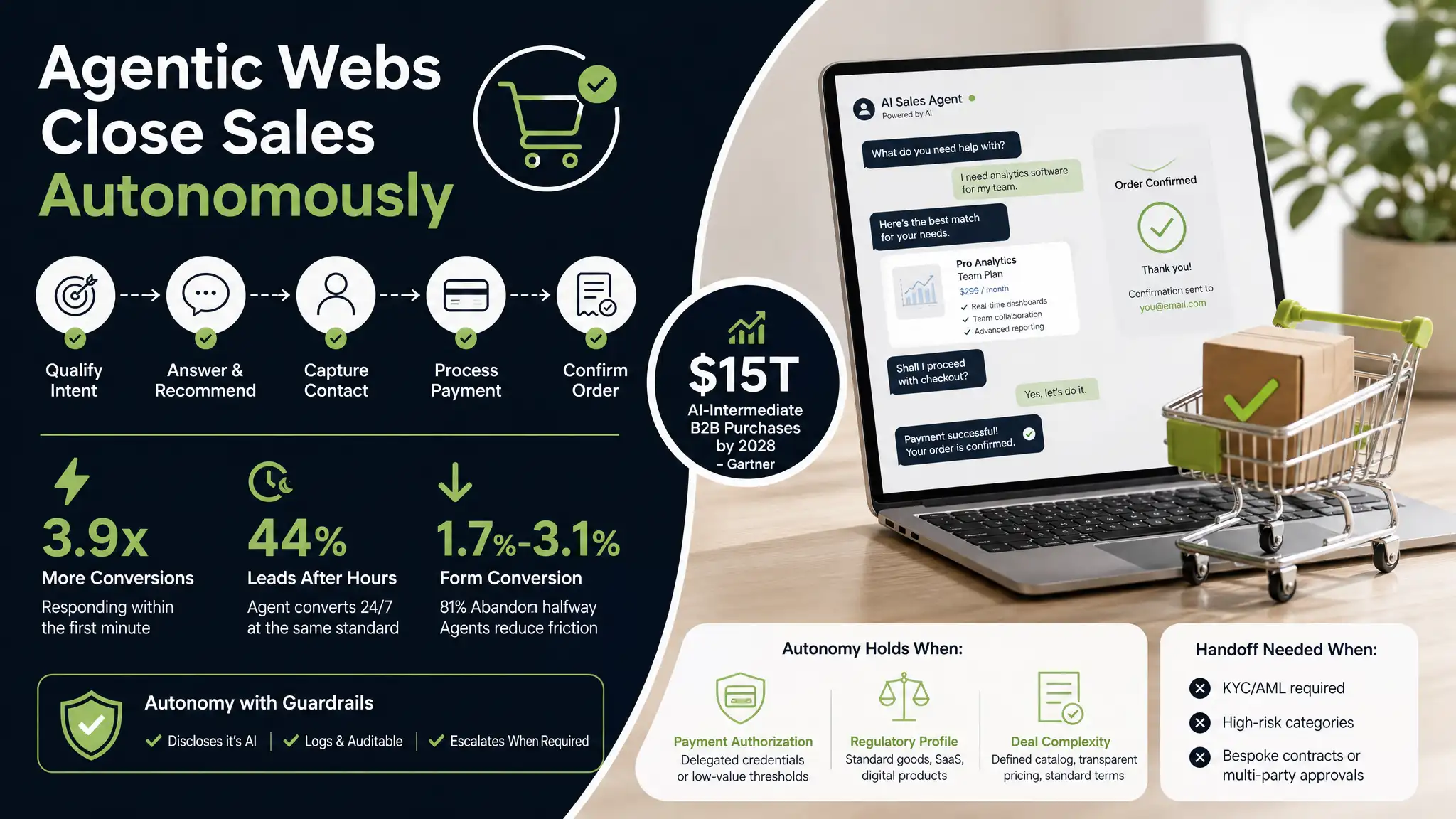
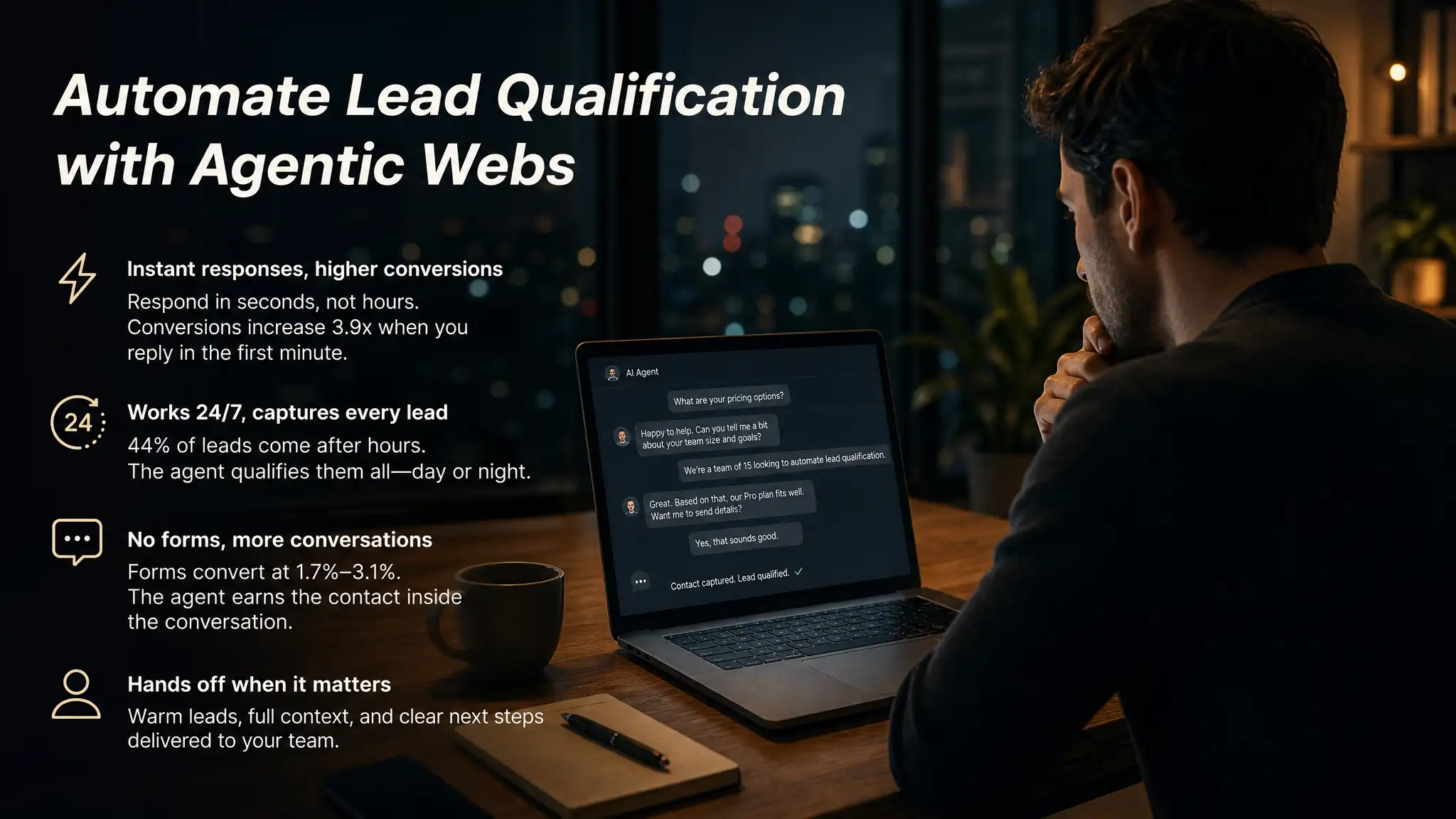
Converses and acts in real time
Answers questions about the business from real knowledge, and operates in three modes: informing, navigating the visitor to what they need, and capturing intent, without page-hopping or forms.
- 02
Personalizes by intent, not by segment
Adapts each interaction to what the visitor states in natural language, not to a cookie or a segment, presenting what they need already structured and replacing rigid pre-coded interfaces.
- 03
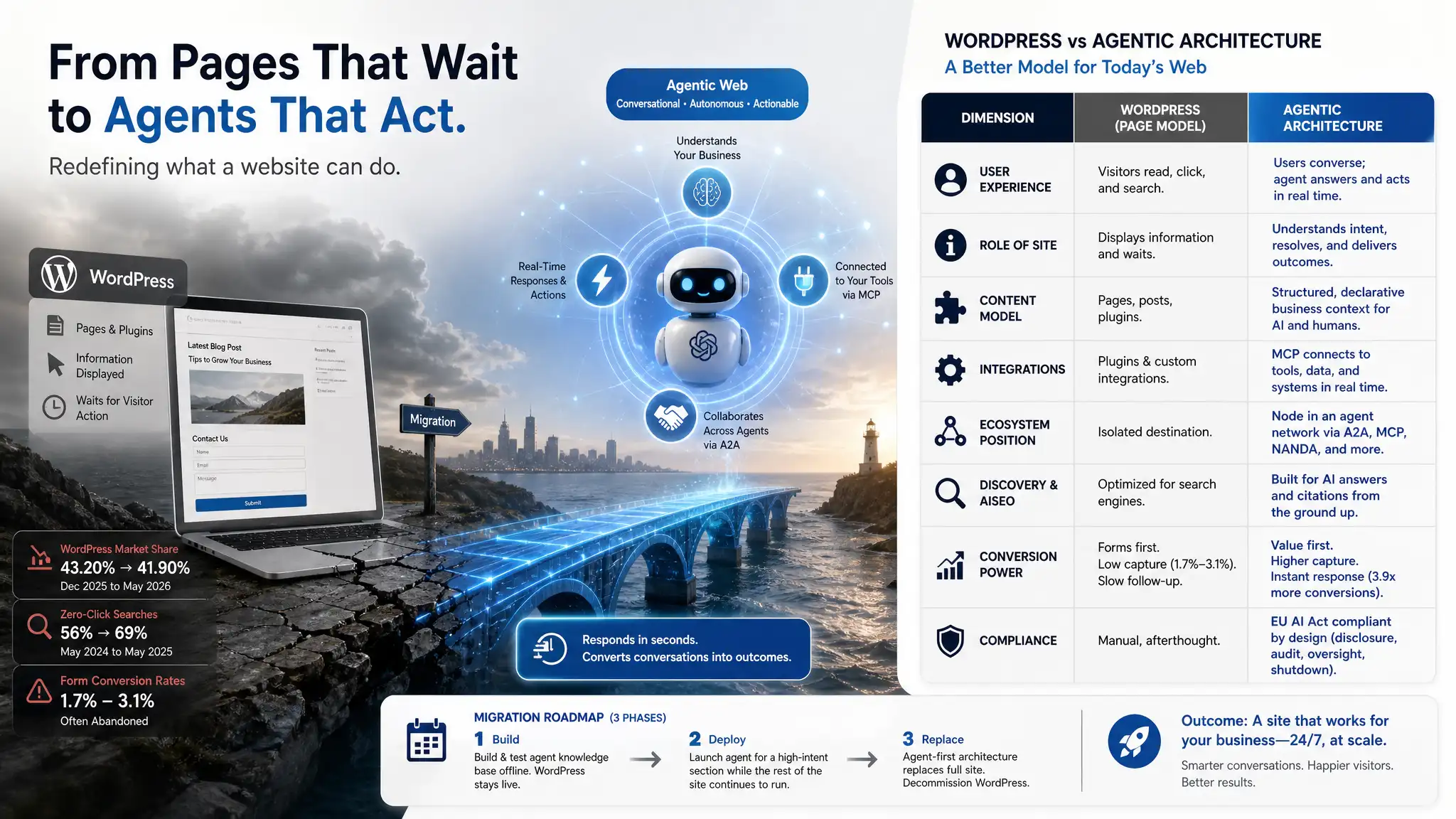
Operates as a node other agents can read
Exposes clean, structured data that external agents, from other companies or from buyers, can query and transact with directly, under the protocols consolidating as standard (MCP, A2A).
- 04
Stays in sync with the business
Connects to the CRM, the ERP and internal AIs so answers reflect live availability and pricing, and every interaction feeds the systems the team already uses, closing the storefront-to-operations gap.
- 05
Formulates its own content strategy
Analyzes the offering, market position, competition and metrics to propose titles, angles, target queries and cadence, as a living plan that adapts to objectives at a frequency no human team could sustain.
- 06
Updates and improves itself
Generates and publishes content optimized for search and AI answer engines, measures results in the funnel, and adjusts the next cycle, turning the most frequent real queries into indexable pages.
- 07
Runs specialized apps on top of the agent
Invokes vertical applications within the conversation, a diagnostic, a valuation, a configurator, each connected as a module via MCP, so capability accumulates on the platform, not in any single piece.
- 08
Measures the whole channel end to end
Traces which content drives which conversation that produces which lead, in a single funnel per site, instead of stitching analytics, CRM and tracker reports across disconnected tools.