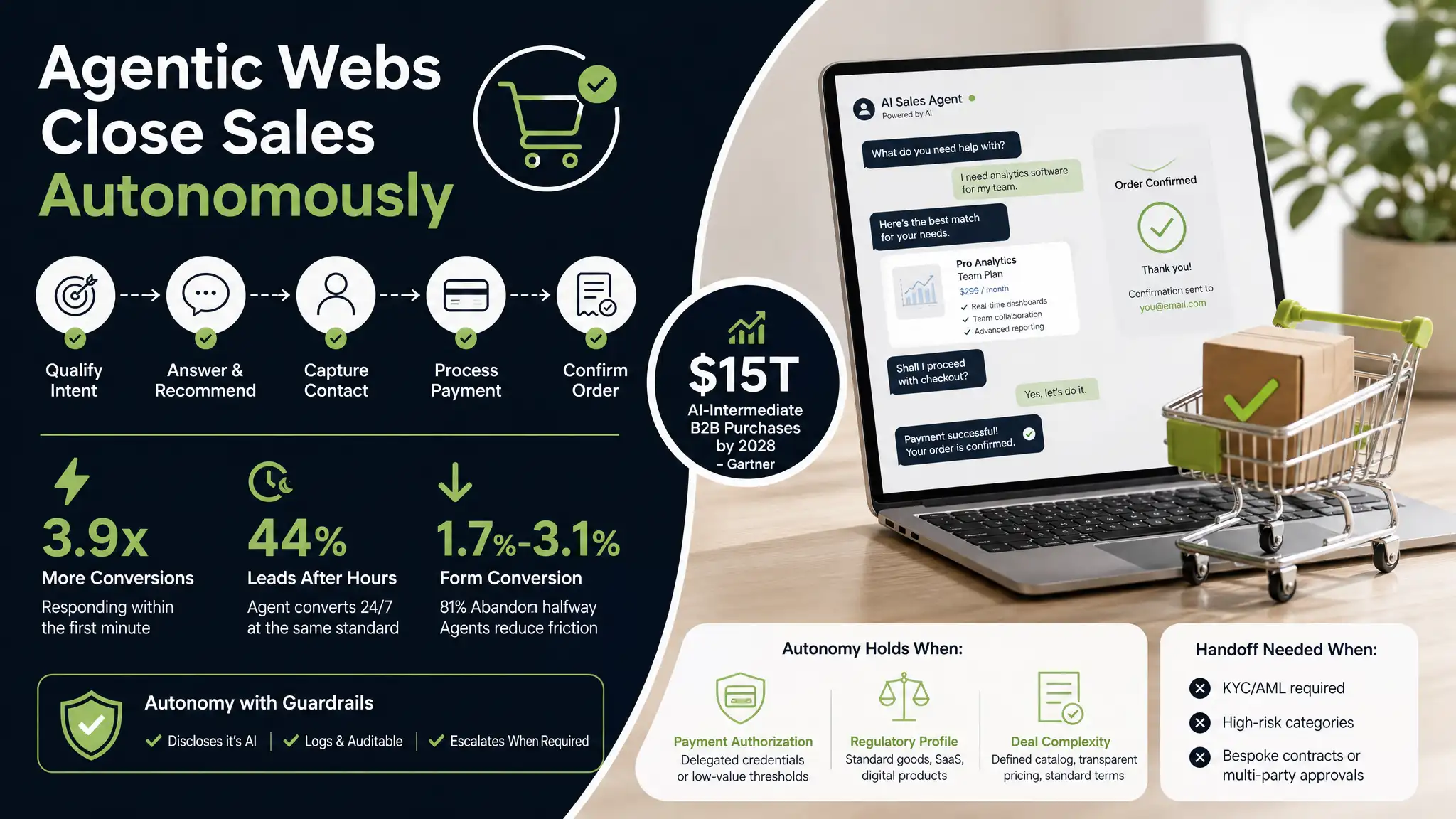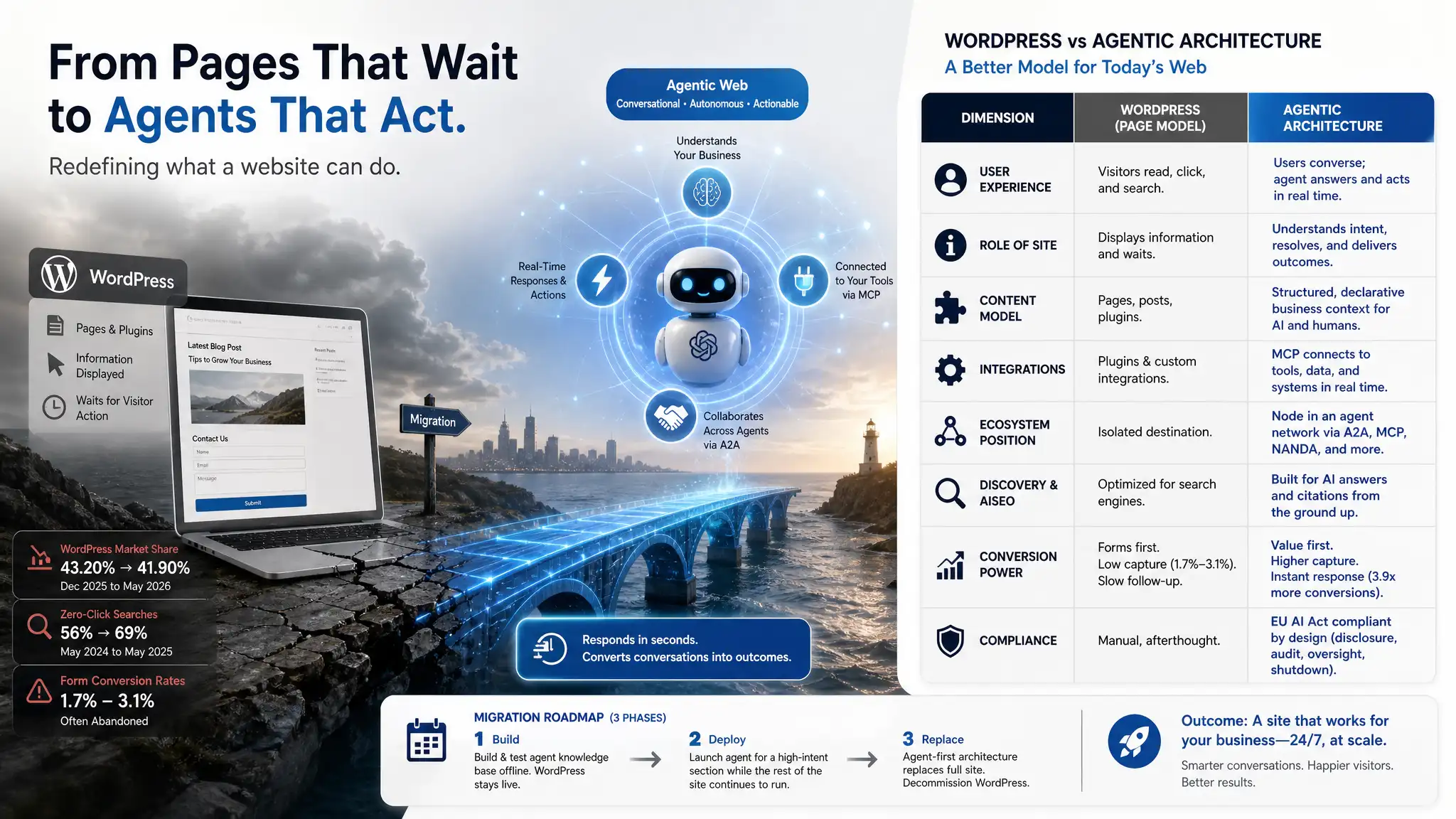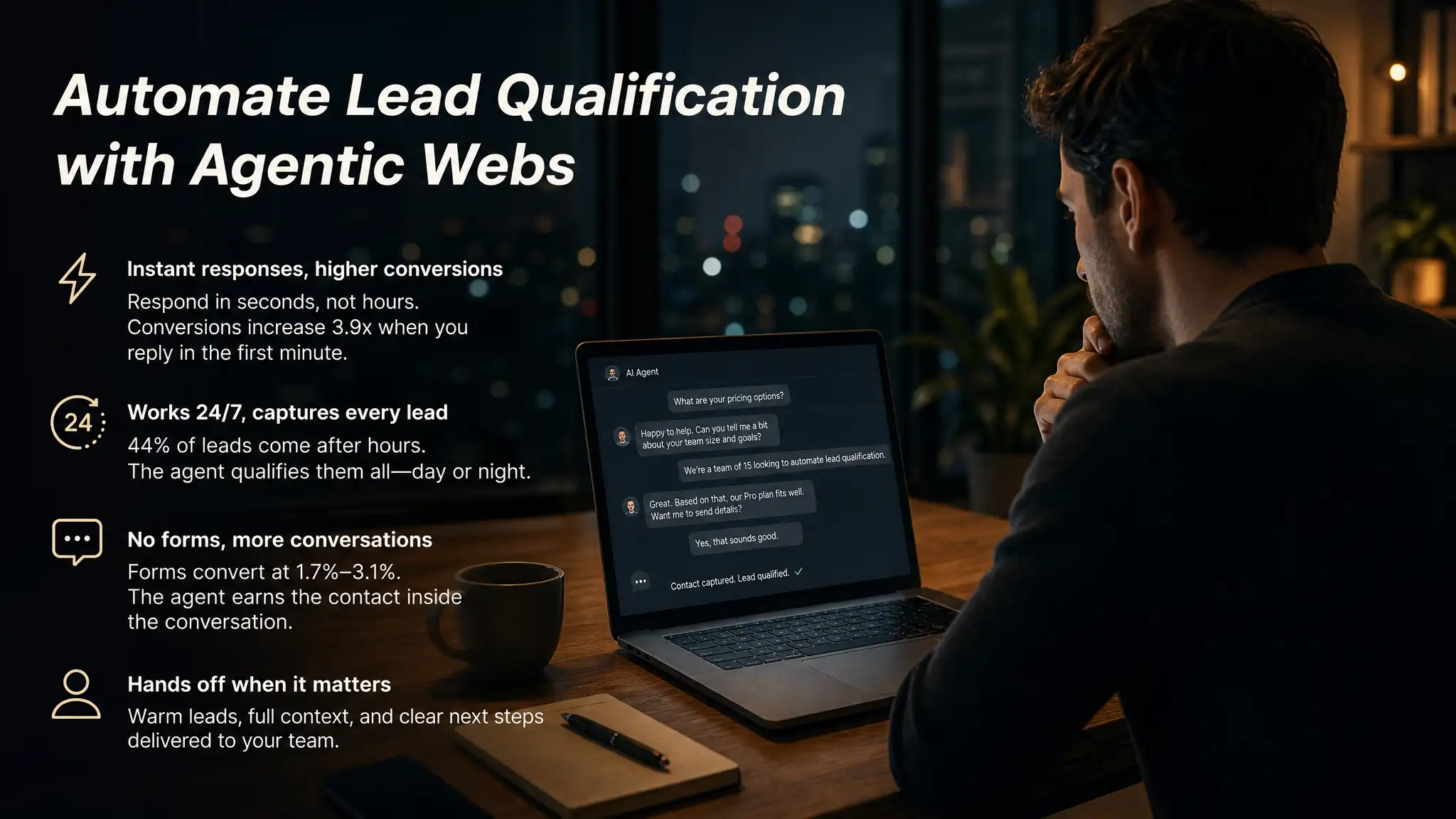
An agentic web system automates lead qualification by running the complete pre-sale cycle inside a single conversation: answering questions, scoring intent, and capturing the contact once the visitor is ready to act. No forms, no waiting, no human needed until the deal is warm. Agentic Webs is where that system starts.
The Qualification Cycle an Agentic Web Runs
A traditional lead-qualification funnel splits across multiple tools and touchpoints: a landing page, a form, a CRM entry, a follow-up email, and eventually a discovery call. An agentic web collapses that chain into one continuous dialogue.
The moment a visitor arrives, the agent begins reading intent. It responds to what the visitor actually says in natural language, not to what segment they belong to by cookie data. Someone asking about pricing gets a different response than someone asking about compatibility or turnaround time, and the agent adjusts in real time, not by switching page templates but by generating the right answer on the fly.
Qualification happens inside that exchange. The agent surfaces the questions that reveal genuine buying intent, resolves objections that would otherwise kill the lead, and by the end of the conversation knows whether this visitor is ready to transact, needs more time, or is outside the ideal profile entirely. A human sales team does this work over days; the agent does it in minutes, at the marginal cost of inference.
How Does Response Time Affect Conversion?
Speed is the single most leveraged variable in lead qualification, and most businesses have no idea how badly they are losing on it.
The average human team takes 47 hours to respond to a web lead. Responding within the first minute of intent, by contrast, multiplies conversions by 3.9 times. That is not a marginal gain from a CRO tweak; it is a structural difference between a business that converts and one that collects contact data it never closes.
The reason is simple: a visitor who asks a question is in a decision window. That window closes fast. When the answer arrives seconds later, while the intent is still live, the conversation continues. When the answer arrives the next morning, the visitor has already moved on, compared competitors, and potentially bought from whoever replied first. 78% of customers buy from the first business to respond, and an agentic web is, by definition, always first.
💡 Response architecture: The bottleneck is rarely motivation; it is availability. An agentic web does not need a salesperson on standby to respond instantly. The agent holds the conversation, qualifies fully, and only routes to a human when the lead is warm and the timing is right.
What Happens to Leads Generated Outside Business Hours?
44% of leads arrive outside normal business hours. That is not a rounding error; it is nearly half of all buying intent, generated when no one is at the desk.
A conventional website handles this with a contact form that sits there. An after-hours answering machine might offer a callback. Neither qualifies anything. Both signal to the visitor that they are not a priority.
An agentic web does not have business hours. The agent at 3 AM answers with the same accuracy, the same personalization, and the same qualification depth as at 10 AM on a Tuesday. It does not apologize for the hour or redirect to a form. It runs the full cycle: answers the question, reads the intent, captures the contact if the visitor is ready, and logs a fully qualified lead for the human team to pick up at the start of the next day, ready to close.
Lead Capture without Forms
Forms are the standard mechanism for collecting lead data, and they perform terribly. Conversion rates for web forms land between 1.7% and 3.1%, and 81% of forms are abandoned before submission. The form itself is the friction that kills intent.
An agentic web does not lead with a form. The agent earns the contact by providing value first: it answers the questions the visitor came with, resolves what was blocking them, and offers a genuine reason to continue the relationship. The request for a name and email arrives inside the conversation, once the visitor has already experienced something useful, not as a toll before the gate.
This matters beyond the conversion rate. A contact captured through a conversation arrives with context: what they asked, what their intent was, which objections came up, and how the agent resolved them. The human who follows up is not starting cold; they are continuing a conversation that has already been partially closed.
When the Agent Hands off to a Human
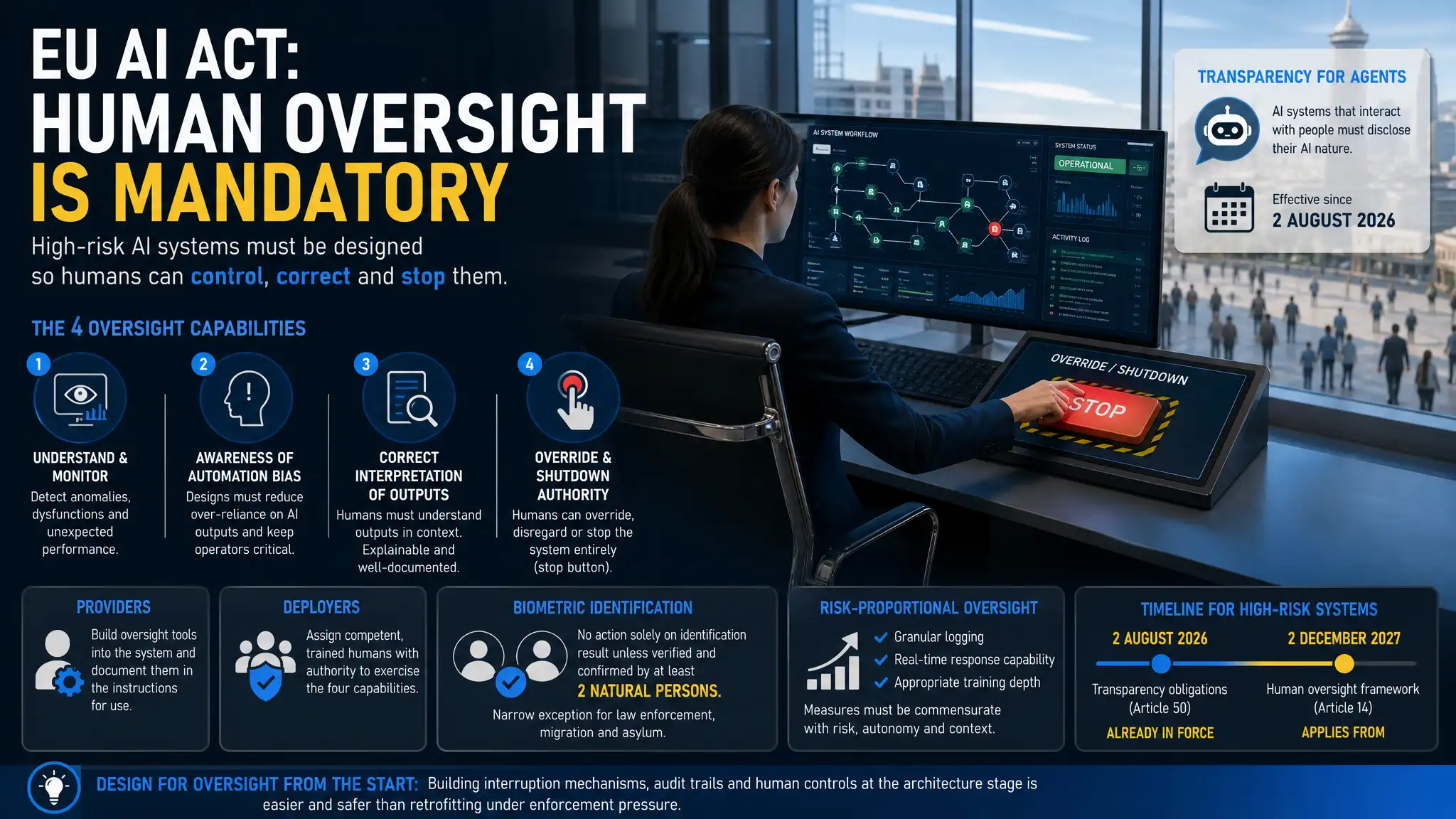
Not every lead closes in a conversation. Complex deals, high-value clients, and situations that require legal, technical, or logistical specifics all eventually need a human. The agentic web is designed for this boundary, not against it.
The agent qualifies until the lead is warm and the specific need is clear, then routes the handoff with everything the human needs: a full conversation transcript, the intent signals that surfaced, the questions that remained open, and the recommended next step. The human team does not repeat the discovery process; they step in at the moment it is worth their time.
This is what 24/7 qualification without 24/7 staffing actually looks like in practice. The agent handles volume, consistency, and availability. The human handles judgment, relationship, and closure. Neither tries to do the other's job.
To have this qualification system running on your website, the next step is a conversation about your business, your current acquisition process, and where the agent fits. That conversation starts at Agentic Webs.