For thirty years we have designed websites for one kind of visitor: a person with eyes, limited patience, and a mouse. That assumption is breaking. The next thing to land on your site may not be human at all — it may be a customer's shopping agent, a B2B buyer's research assistant, or an answer engine's retrieval bot looking for the source to cite.
The question is no longer how to make a page convince a person in three seconds. It becomes a different one: when the thing querying your business is a machine acting on someone's behalf, can it read you, ask you questions, and transact with you without friction? Most websites today answer no.
Key Takeaways
The shift from human visitor to agent visitor is not a distant prediction — the infrastructure is already deployed and running in production.
From Human Visitors to Agent Visitors
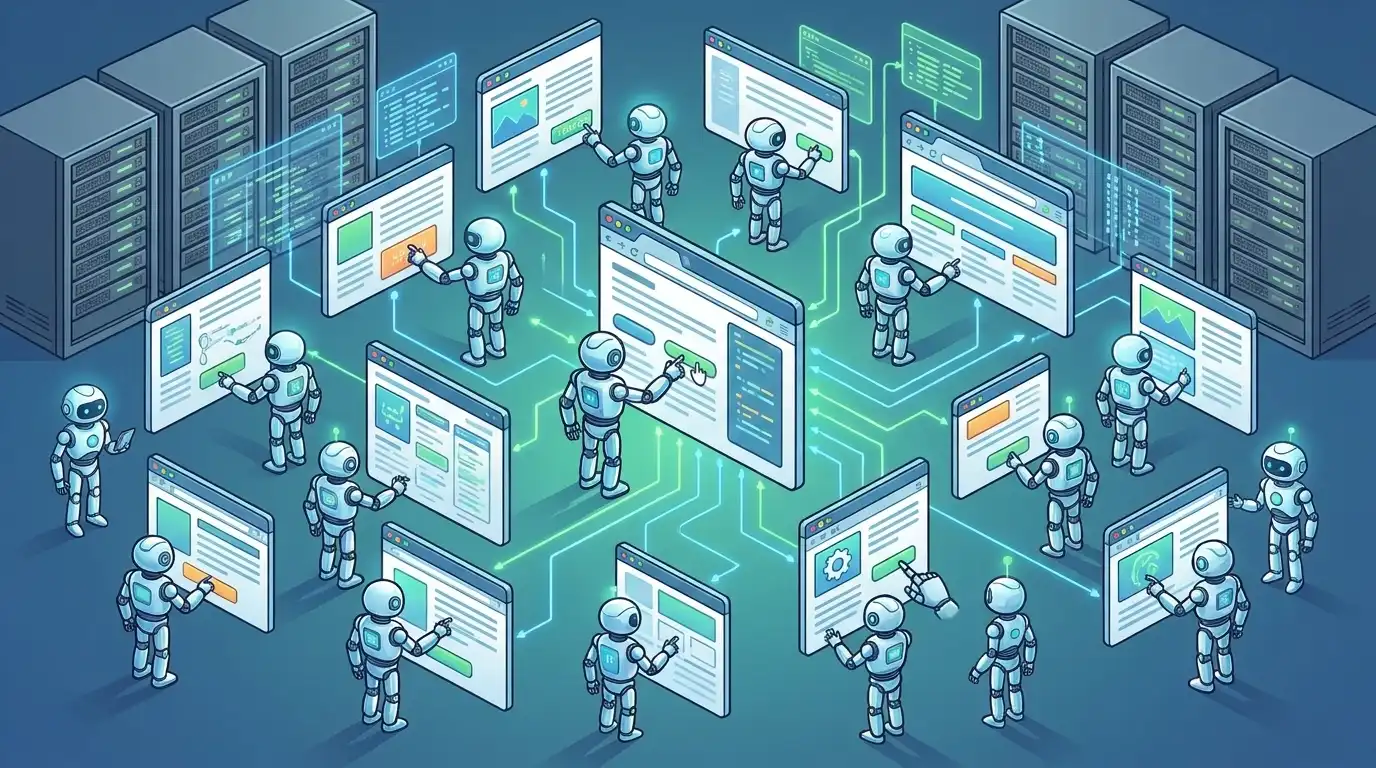
Discovery behavior is moving from the browser to the conversation. When someone asks ChatGPT, Gemini, or Perplexity about a product or a supplier, the one actually traversing the web on their behalf is an agent, not the person.
That agent does not scan a page — it interrogates it. It does not care about your hero image, your menu, or your scroll animation. It wants a specific fact — specification, price, availability, compatibility — and it wants it in a format it can process and return to whoever sent it.
The conventional web was built for the opposite: visual presentation for a human who decides by looking. When the visitor is a machine, that visual layer stops being the asset and becomes an obstacle the agent has to work around to reach what matters.
What "Agent-Readable" Actually Means
Agent-readable is not a slogan — it is a measurable technical property. A website has it when another AI can reach its content, understand it unambiguously, and at best execute an action against it.
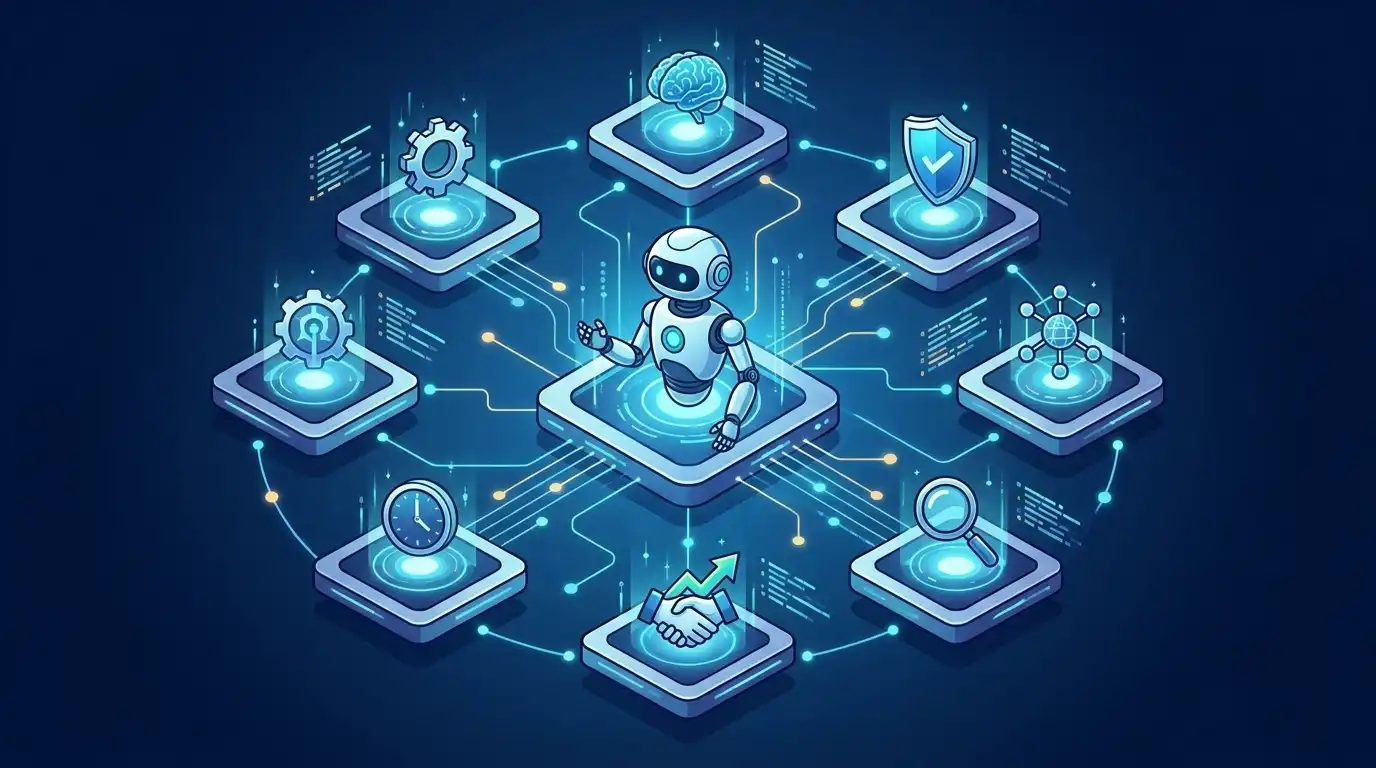
That rests on three concrete things: structured data describing what each thing is, clean endpoints an external agent can query, and adherence to the protocols consolidating as the standard for agent interoperability.
- Structured data
- schema markup and declarative content per sentence
- Machine-readable endpoint
- catalog, stock, and price queryable via API
- Tool protocol
- MCP, so an agent can access functions
- Agent-to-agent protocol
- A2A, for coordination and transaction between agents
- Real-time state
- responses served from the live ERP/CRM, not frozen data
The difference from a traditional website with good SEO is one of nature, not degree. Classic SEO optimizes for a human to find and read; this optimizes for a machine to query and operate.
The Protocols Are No Longer Theory
The usual objection — "this is futurism" — no longer holds with the data in front of you. MCP reached 97 million monthly SDK downloads by March 2026, up from roughly 100,000 at launch, and OpenAI, Google, Microsoft, and Salesforce all shipped support in under thirteen months.
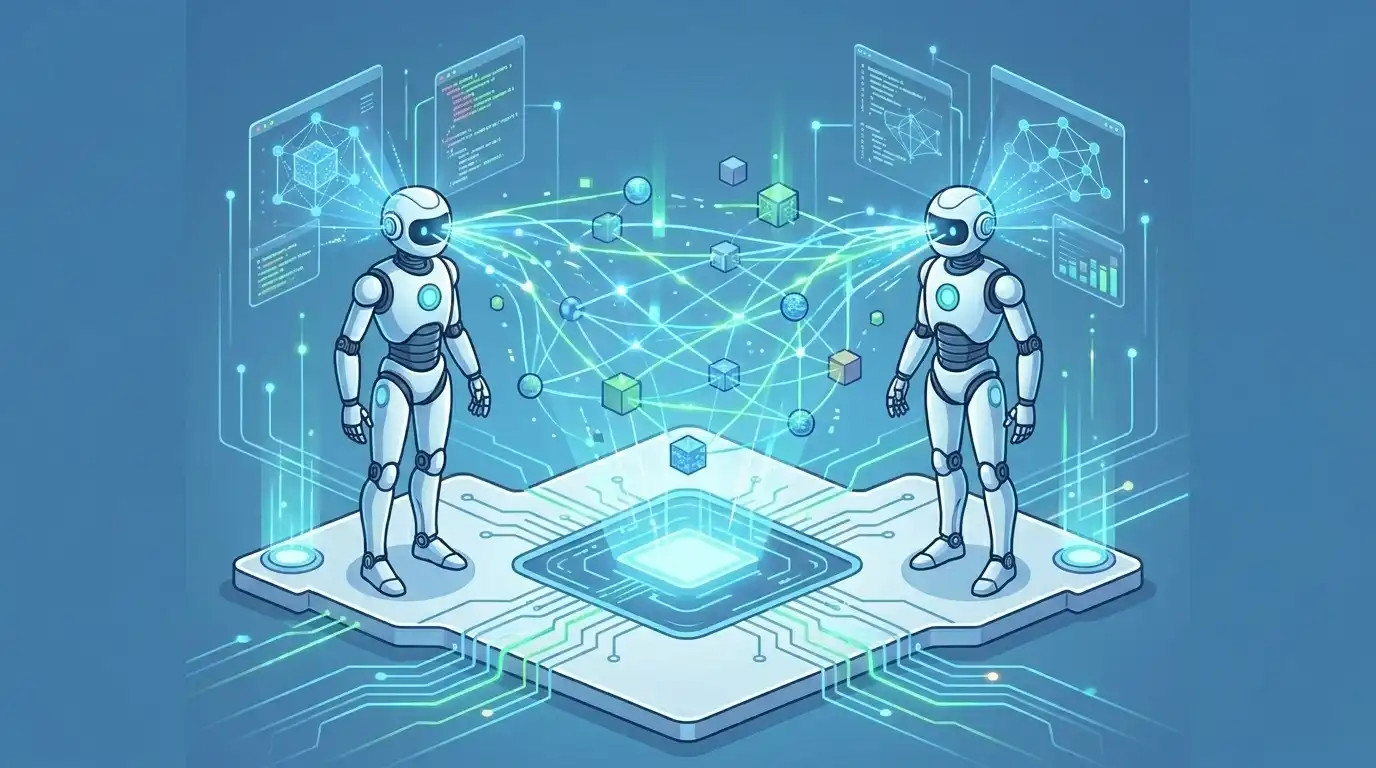
The standard for agents to communicate with each other is advancing at the same pace. The A2A protocol, hosted by the Linux Foundation, announced more than 150 organizations backing it at its one-year mark, with integration across Google, Microsoft, and AWS platforms and production deployments across several industries.
It is worth placing who drives this, because it defines its character as neutral infrastructure rather than one vendor's product.
MCP (Anthropic, donated to the Agentic AI Foundation within the Linux Foundation) standardizes how an agent accesses tools and data. A2A (Google, also under the Linux Foundation) standardizes how two agents discover each other and transact.
That both live under neutral governance with the major providers on board is the relevant signal: this is not one company's bet, it is the plumbing the machine-operated web will be built on.
Commerce and Education: the Scenario Is Already Real
Commerce is where it shows first. Microsoft Copilot Checkout and Perplexity's Instant Buy let people buy without leaving the conversation, while Google rolls out checkout in its AI Mode for selected retailers. The buyer's agent queries products and, in some cases, closes; in others it still hands off to the merchant's site.
It is worth not overselling the state of the art: OpenAI deprecated its Instant Checkout in March 2026, and its protocol's current model is product discovery plus redirect to the merchant. Full machine-to-machine is not closed on every front yet, but the direction is unambiguous and the money is already moving — AI platforms are expected to account for $20.9 billion in retail spending in 2026, nearly quadrupling the 2025 figure.
| Layer | Conventional web | Agent-readable web |
|---|---|---|
| Target visitor | Human who browses | Human + external agent |
| Access to data | Visual page reading | Structured query via API |
| Stock and price | Manually updated text | Served live from the ERP |
| Closing the deal | Human form | Agent-to-agent transaction |
In education the mechanism is the same, shifted to discovery: when someone asks an AI what to study for a goal, the agent-readable institution is the one the model can read, understand, and cite as the answer — instead of the one that only shows up in a search engine consulted less and less.
What a Business Should Do Now
The first step is not to hire anything — it is to check whether your site is readable by a machine. Paste your URL into an AI agent and ask it to extract your three main products with price and availability. If it can't, neither will your next customer's agent.
From there, the priority is to expose the data an agent needs — catalog, specifications, availability — in a structured form connected to the real state of the business, not to a copy someone updated three months ago.
The mistake to avoid is treating this as one more plugin on top of a passive website. A data layer for agents bolted onto an architecture meant for human eyes only is a patch that breaks the moment the agent asks for something the site can't serve live.
Why an Agentic Web Is Built for This
An agentic web does not add agent-readability at the end — it ships with it, because its architecture already separates the business data from its presentation. The same system that sustains the conversation with a human visitor exposes that knowledge in structured form for another machine to query.
That is why it operates under the protocols consolidating as the standard and connects to internal systems in real time: when an external agent asks about stock or compatibility, the answer comes from the live ERP, not from frozen text. Interoperability is not a layer bolted on; it is a consequence of how the thing is built (the layered architecture covers this in detail).
The passive web was designed for a world where every visitor was human. That world is ending, and the business that offers nothing but layout for eyes will lose ground to the one that lets a visiting agent resolve its query or close a deal instantly.
Frequently Asked Questions
What does it mean for a website to be "agent-readable"?
It means another AI can access its content, understand it unambiguously, and operate with it. It rests on structured data, endpoints a machine can query, and adherence to protocols like MCP and A2A.
Is this the same as AISEO?
No. AISEO is about an answer engine citing you when someone asks. Agent-to-agent interoperability goes one layer further: another agent transacting directly with your site, not just mentioning it.
Are AI agents already buying online for real?
Partly. Platforms like Microsoft Copilot and Perplexity let people buy inside the conversation, though some flows still redirect to the merchant. AI-driven retail spending is projected at $20.9 billion in 2026.
What are MCP and A2A?
MCP standardizes how an agent accesses tools and data; A2A standardizes how two agents discover each other and transact. Both sit under Linux Foundation governance, with hundreds of organizations on board.
Do I have to rebuild my website for this?
If your site is passive, bolting an agent-readable layer on top tends to be a fragile patch. An agentic web is built for it by architecture, because it separates business data from presentation from the design up.